Two systems
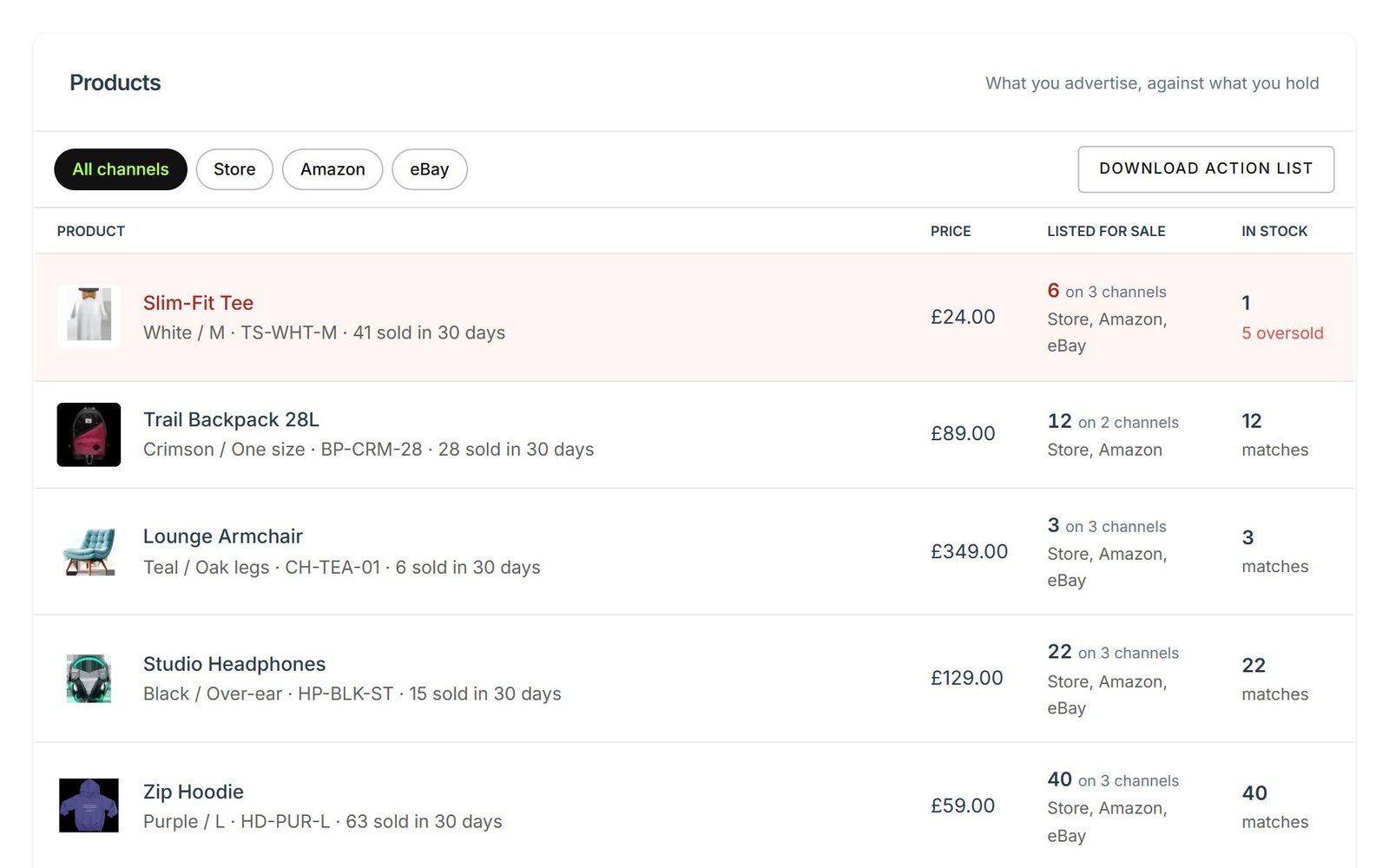
Both contain the same information. Somebody updates both. Eventually they stop agreeing.

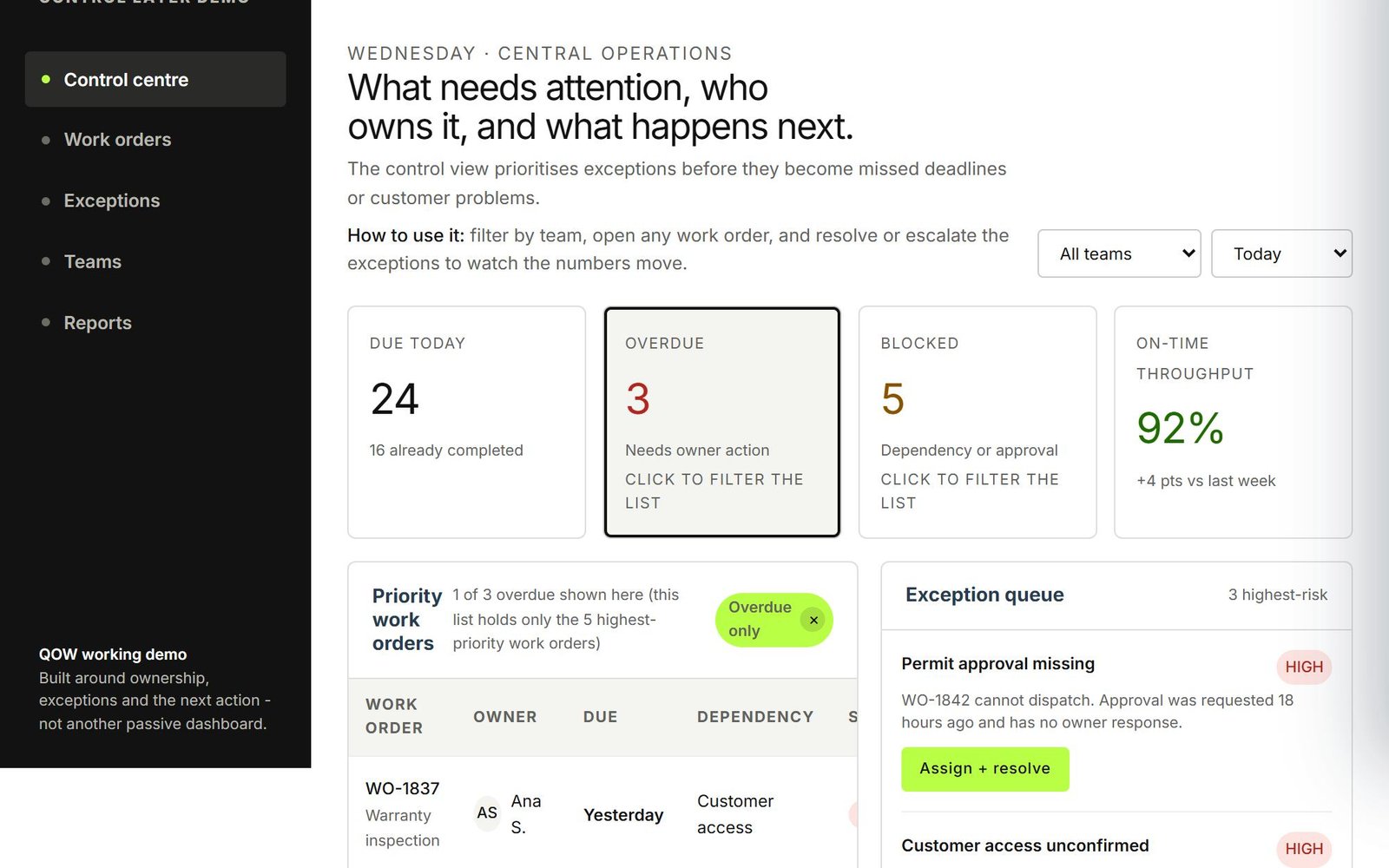
You may already have a website, CRM, ads, spreadsheets and software. The problems usually appear between them: leads get missed, people copy the same information twice, reports disagree, customers hit dead ends, or an important process only works because somebody remembers what happens next.
If a standard tool or a smaller fix is enough, we'll tell you.
Where custom work becomes useful
Standard products handle the common case well. The harder problems usually live somewhere else: the product nobody makes yet; the handoff between two platforms; the exception no workflow anticipated; the business rule trapped in a spreadsheet; the customer journey that does not fit a template; or the process that only works because somebody remembers what happens next.
That is the part we design and build.
Both contain the same information. Somebody updates both. Eventually they stop agreeing.
Something falls outside the normal workflow. A person decides what to do, but there is nowhere useful to record what happened or why.
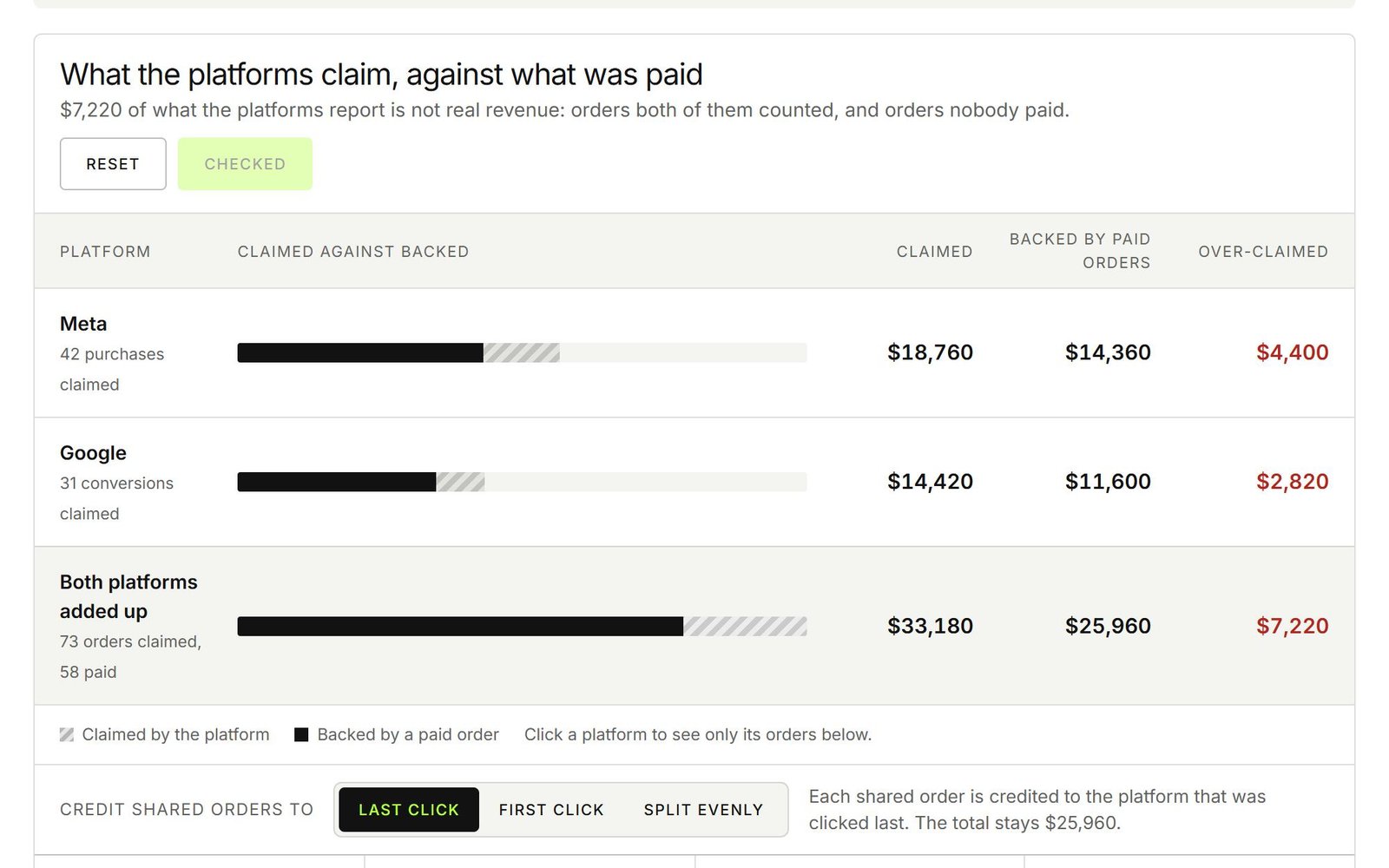
Every report looks internally correct, but two systems disagree when you put them beside each other.
It works because somebody is quietly compensating for it by hand every day.
What kind of company is QOW?
A development shop is useful when you already know exactly what needs to be built.
A design agency may focus on the experience.
A marketing agency may stop at the campaign.
A systems integrator connects products that already exist.
A lead problem may be a form problem. A CRM problem may need automation. A website problem may be operational. An advertising problem may actually be tracking or slow follow-up. That is why these capabilities sit together.
01
Stop entering the same information in more than one place.
02
When the tool you need simply does not exist.
03
When the website is not the whole problem.
04
Use AI where the reading, searching, comparing or responding is expensive.
05
An ad is only useful if what happens after the click works.
Nine projects. One consistent thread — operational clarity where there was none.
(a.)
Ecommerce, Shopify, Product UX, Catalog Operations
(b.)
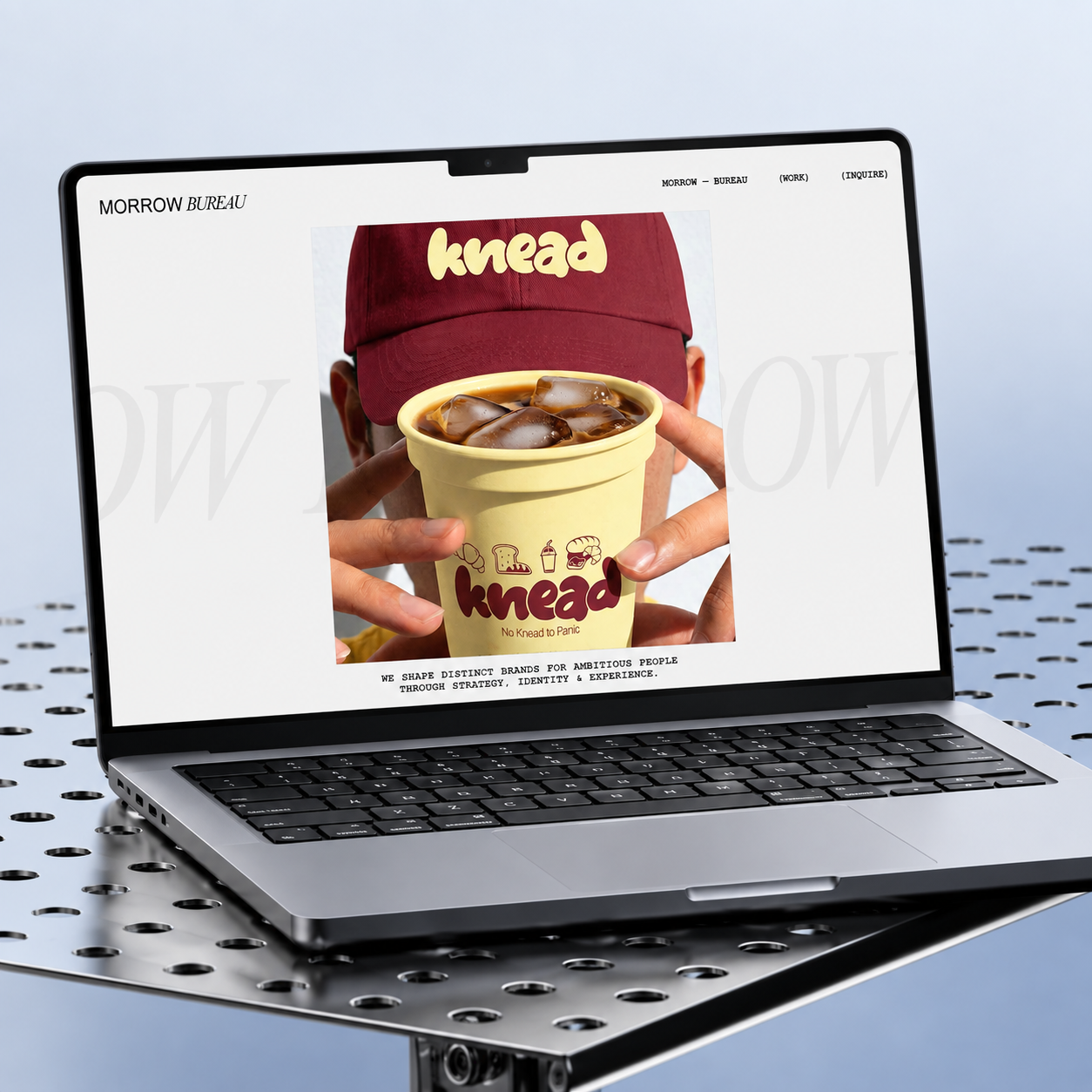
UI/UX, Website Design, Motion, Front-End Development
(c.)
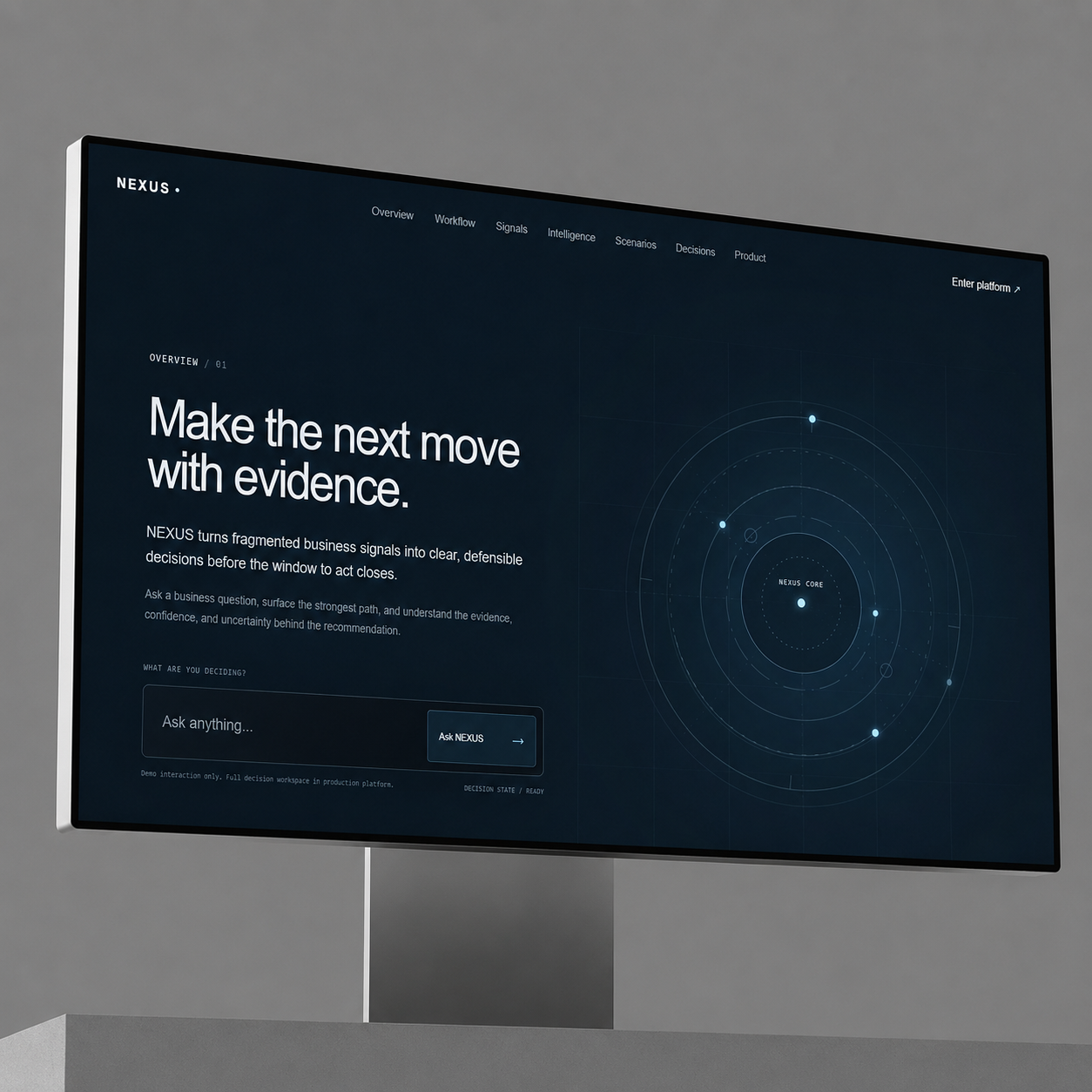
Product UX, Decision Intelligence, Data Visualisation, AI
(d.)
Website Strategy, UI/UX, Coaching, Responsive Development
(e.)
UI/UX, Portfolio Website, Motion, Front-End Development
(f.)
Website Design, Development, Real Estate, Conversion Strategy
(g.)
Website Strategy, UI/UX, Development, Lead Generation
(h.)
Ecommerce, Product UX, Conversion, Front-End Development
(i.)
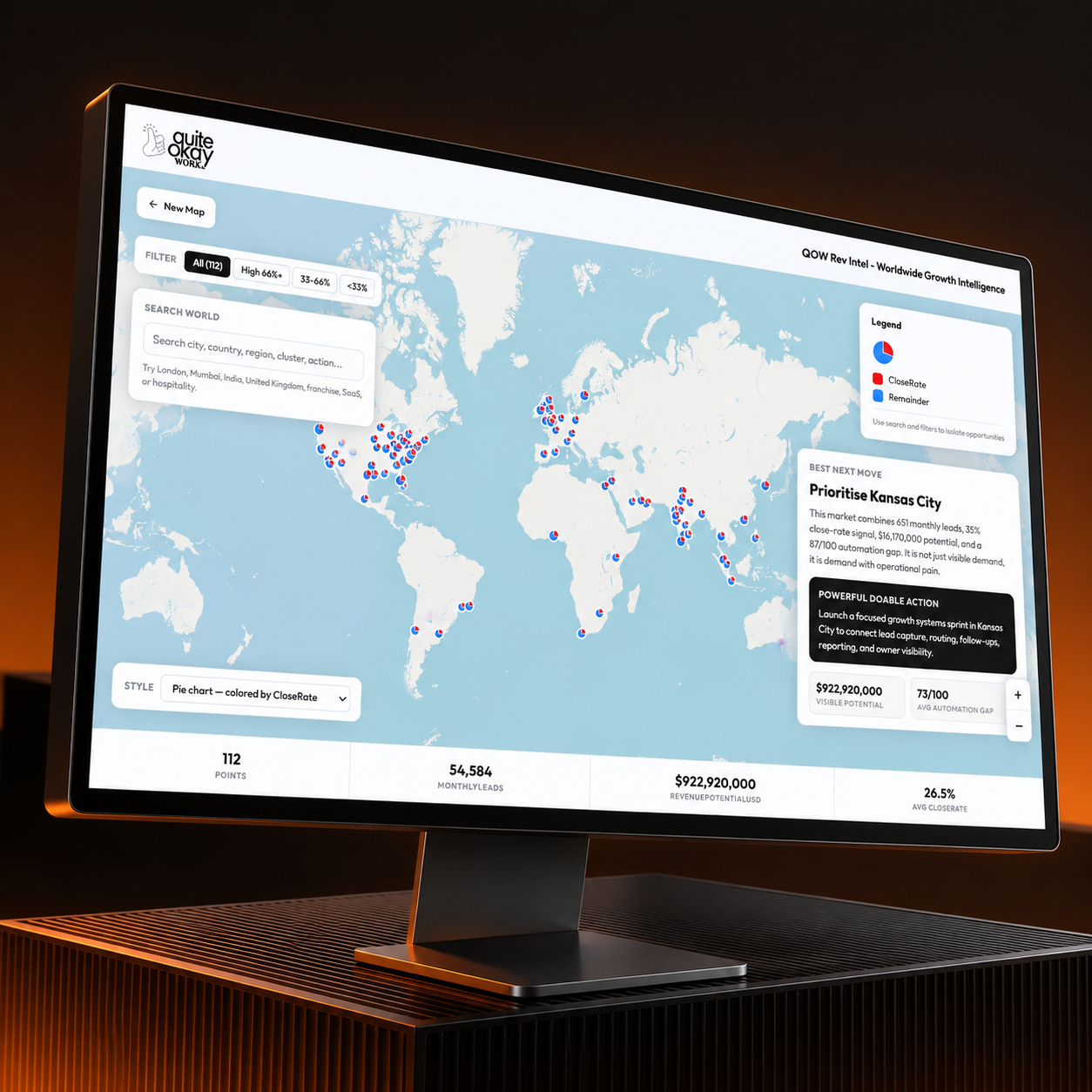
Data Product, Revenue Intelligence, Geospatial UX, Development
System Anatomy
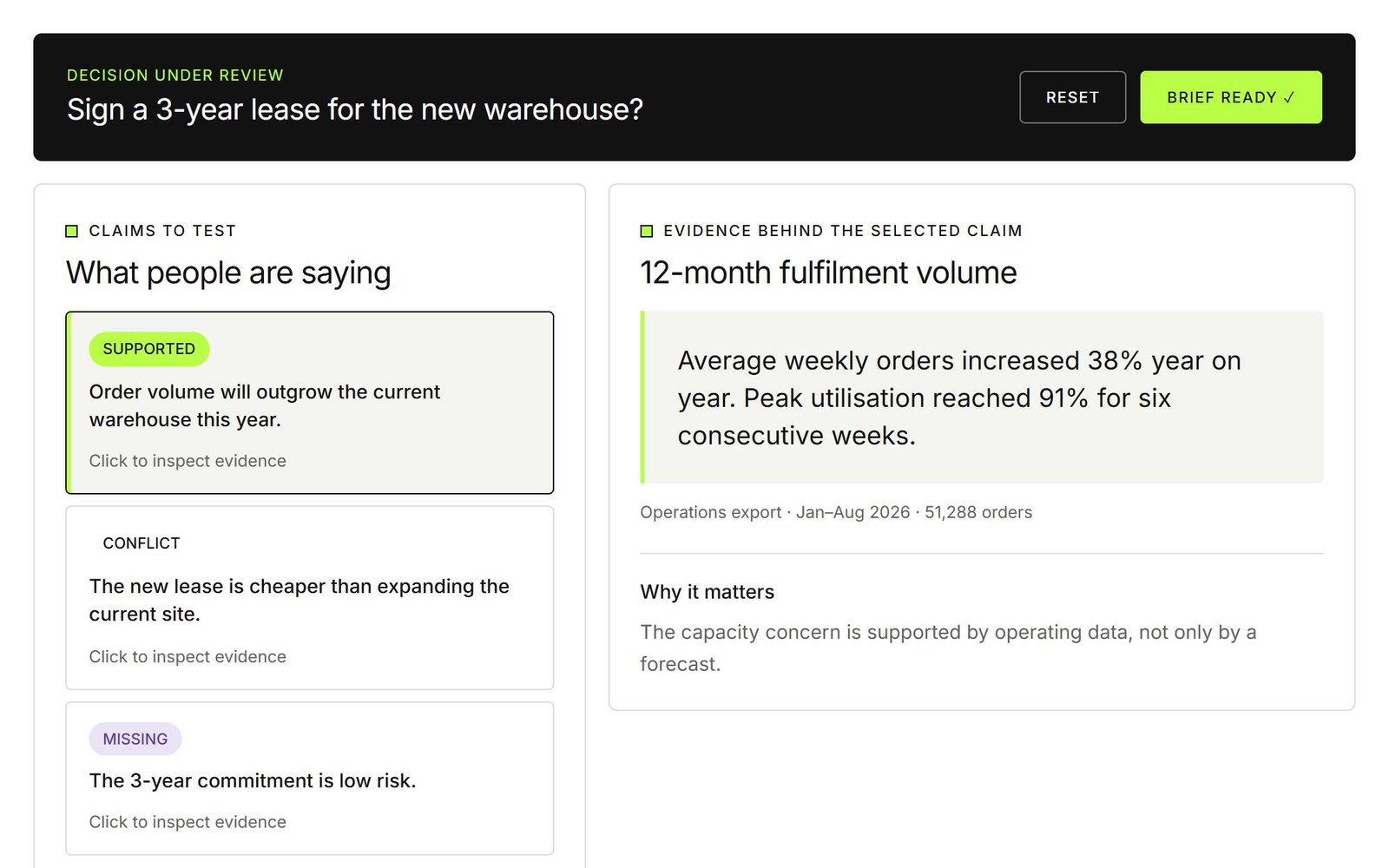
Who uses it? What can change? What rules apply? What connects to what? What happens when something fails? What evidence does somebody need before making a decision? How does the system recover?
The exceptions are often where the money and the trust actually live.Hiring a team you have never worked with for something important is a real risk. So we try to reduce the size of the first decision.
01
We understand the workflow, the people, the data, the constraints and where things currently break. Sometimes this ends with us saying the thing you asked for is not the thing you need.
02
We build the hardest or least-certain part first. Something you can inspect and use to decide whether the larger idea is worth pursuing.
03
Once the important assumptions survive the proof, we build the working system around them.
04
We support it, monitor it and extend it as the business changes.
Why start this way
QOW is useful when the problem is valuable enough to solve properly, crosses tools or teams, or needs the uncertain part proved before a large build.
There is enough time, money, customer friction or operational risk at stake to justify fixing it properly.
The issue moves between tools, teams or customer journeys instead of living neatly inside one screen.
A template, plugin or SaaS product gets most of the way there, but the missing part still matters.
You would rather test the uncertain part than approve the largest possible version on faith.
You need people who can help decide what should be built, not only extra hands billed by the hour.
The useful question after launch is whether the team saved time, customers moved more easily, or the numbers became more trustworthy.
Probably not a fit: if a template, plugin or standard SaaS product already solves the problem well, or if you only need the lowest-cost implementation of a finished specification. If a simpler answer is enough, we would rather tell you that.
What happens after the demo?
Where applicable, a project includes clear source-code ownership, repository and setup documentation, sensible handling of access and credentials, agreed acceptance criteria, staging and release, recovery expectations and defined support terms.
For AI-assisted work: AI may accelerate research, prototyping, testing, documentation and implementation. Architecture, access, approvals, acceptance and release remain human-accountable.
About Quite Okay Work
Quite Okay Work is a business systems and product studio. We design and build software, automation, digital experiences, commerce systems and applied AI.
We do not publish numbers we cannot support, present concepts as deployed work, or use confidential client work as marketing proof.
Where we cannot show client work, we would rather build something of our own that you can inspect than ask you to trust a vague claim.